Where the work actually happens
A map is a headline. Underneath it are named regions, a partner network held to the same standards as our own teams, and a rule for choosing which community comes next.
Africa
Where we started and where most of the work still happens. Nigeria is home: both our offices are here, and the majority of programmes are run directly by our own teams rather than through partners.
Asia
Smaller in scale and delivered entirely through local partner organisations. We fund, train and audit; the people running the programmes live in the communities they serve and always have.
Global partners
Beyond those two regions we work through a partner network: established local organisations who apply for funding, meet our safeguarding and reporting standards, and are audited on the same basis as our own programmes.
How We Choose A Community
We are asked this more than almost anything else, usually by people who suspect the answer is "wherever is easiest to photograph". It is not, and the process is deliberately unglamorous.
We do not arrive because a community is poor. Every community we could serve is poor. We arrive because there is a specific gap we can close, somebody local willing to own it, and a realistic route to us eventually leaving.
Our Full ApproachSomebody local asks
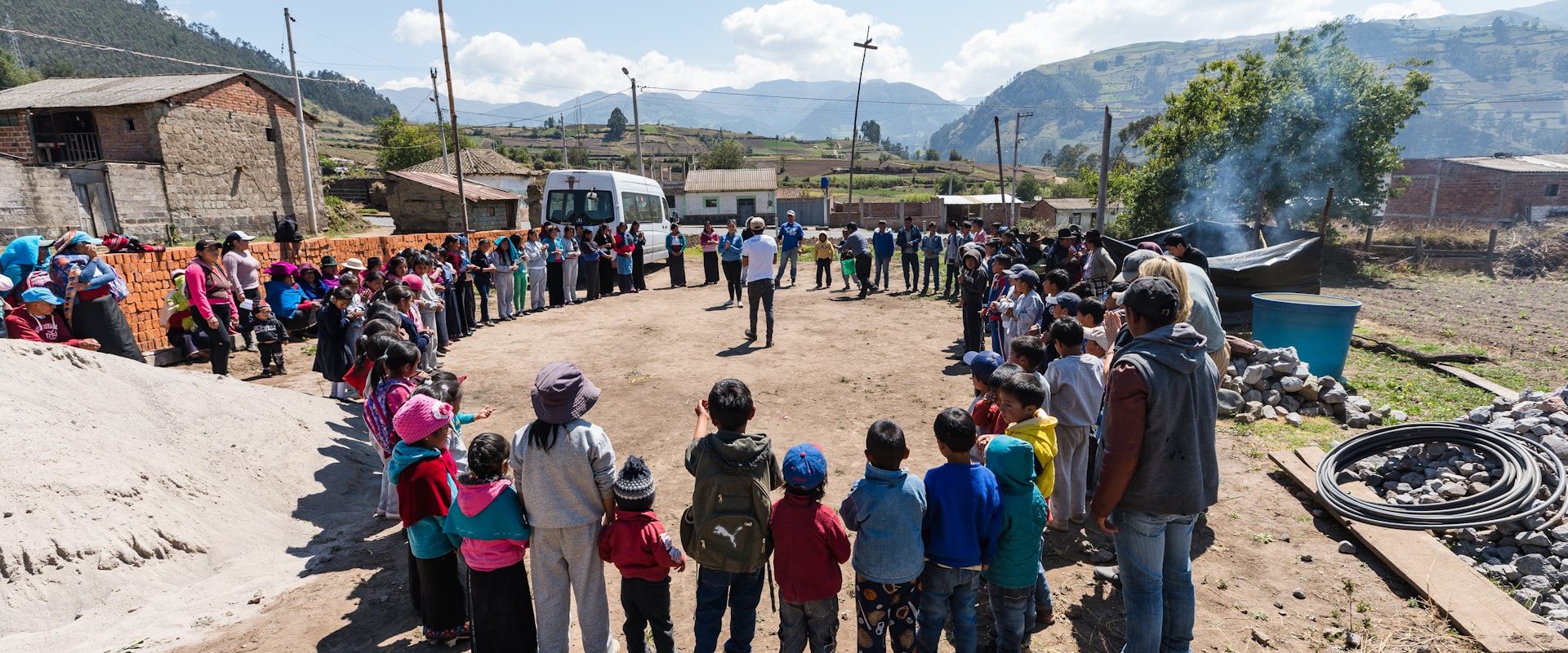
Almost every community we serve approached us, or was introduced by one that already works with us. We rarely arrive uninvited.
We sit and listen first
Meetings with community leaders, women's groups and families before any plan exists. They name the need; we do not guess it.
We check we are not duplicating
If another organisation already runs a feeding programme there, our money is better spent somewhere nobody is.
We agree who owns what
A named local caretaker, committee or health worker for every asset we fund. The borehole that failed taught us this one.
We agree how we leave
What has to be true for the community to carry it without us, written down at the start rather than invented later.
On leaving
We are still in every community we have entered, and we do not leave when a programme stops being photogenic. But staying forever is not success either — the goal is a community that no longer needs us, and an exit we planned rather than one we were forced into.
Two offices, both in Nigeria
A head office in Asaba, Delta State, and a field office in Abuja. Everything else is run by people who already live where the work is — which is cheaper, faster, and does not collapse when a visitor's flight home leaves.
Is there a community we should know about?
If you know somewhere that needs what we do, tell us. Most of the places on this page reached us exactly that way.